Avicenna's Background | Grey Tailored Suits by Lithuanian Designers
-
2026-09-18
On a bright sunny day, upon arriving at the Christian Dior Museum in Granville, the museum staff might offer an apology for the fair weather.
This gentle regret stems from the fact that it was precisely in this often overcast, mist-shrouded coastal setting that Christian Dior's lifelong fascination with shades of grey was born.
Dior regarded grey as the ultimate foundational neutral—and rightly so (more on this below)—adaptable across every color palette, skin tone, hair color, and age.
In his devotion to grey, Dior followed in the footsteps of countless scientists, philosophers, and artists captivated by achromatic tones: black, white, and the spectrum of grey lying between them.
Aristotle was among the first to formulate the theory that the visible spectrum was bounded by black on one end and white on the other. However, he incorrectly assumed that all chromatic colors were merely blends of black and white mixed in varying proportions.
A more precise color theory and the true physical uniqueness of grey were illuminated over fifteen centuries later by Avicenna.
He observed that grey is the sole hue in existence that remains entirely neutral.
He later documented that to perceive the true nature of any color, it must be viewed against a strictly neutral grey background.
Despite centuries of intellectual fascination and the contributions of great minds exploring color physics, the true achromatic nature of black and white was proven only a millennium after Aristotle. Subtler scientific debates endured even longer—well into the 19th century, no unified consensus existed regarding primary colors.
Perhaps this enigmatic nature and total neutrality account for grey's enduring aesthetic allure.
According to consumer research, a mere 1 percent of people declare grey as their absolute favorite color.Yet shades of grey consistently rank among the top three most purchased wardrobe colors globally, claiming an even dominant share during cold seasons.
Historically, grey was associated with austerity and modesty. Yet by the Renaissance, noblewomen sought subtly shimmering grey textiles, commissioning weavers to produce increasingly sophisticated, fashionable nuances—pearl grey (gris de perle), pigeon-breast grey, and dove grey.
As evidenced by the ancient Greek word phaios—translated today as "grey," but once carrying connotations of "shimmering" or "radiant"—the classical concept of greyness differed markedly from modern perceptions.
Gris Dior ("Dior Grey")—the signature shade Christian Dior adopted from the Petit Trianon at Versailles—continues this rich duality.
The Petit Trianon was built to unite architectural majesty with intimate comfort. Soft grey walls served as a refined medium to balance grand ceremonial poise with private tranquility.
Thanks to these unique qualities, grey remains subtly enigmatic, quiet, and fundamentally indispensable.
In this edition, we have curated three tailored suit sets in distinct achromatic tones—ranging from soft, near-neutral grey to deep black.
All Classic Suits by Lithuanian Designers
The Science of Neutral Grey
Not every shade of grey is strictly neutral.True neutral grey (reflecting exactly 18% of visible light) is a completely passive tone.
This pure grey maintains an unchanging shade regardless of lighting conditions—whether viewed under natural sunlight or artificial warmth.
This passivity also means neutral grey does not distort adjacent colors in an ensemble. Unlike pure white or stark black, grey is exceptionally gentle on human visual perception.
It is worth noting that most commercial grey fabrics contain subtle undertones. A simple test helps determine if a textile is neutral grey:
Place the garment directly alongside pure white or rich black. Set against these absolute values, the eyes adjust instantly, revealing any hidden warm or cool undertones.
For best results, observe this comparison under both daylight and artificial lighting.
Classic Jazz
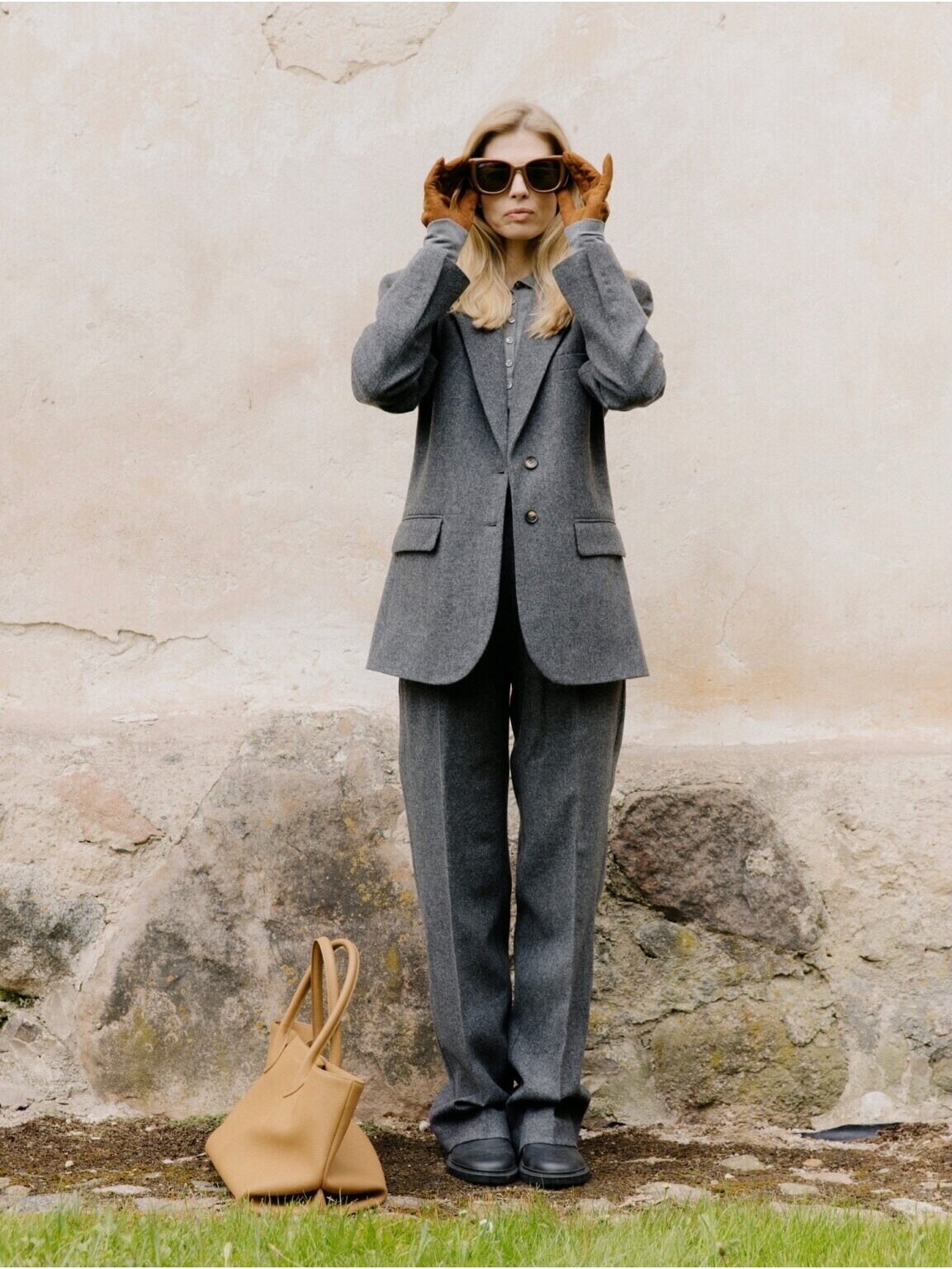
Tailored from 100% merino wool, this suit interprets traditional tailoring through a contemporary lens.In a mid-grey hue, each component appears impeccably classic, yet subtle structural details impart modern poise.
Slightly accentuated shoulders, fluid drape, and a viscose lining allow the fabric to fall naturally, balancing structure with relaxed ease.
THREE IDEAS: Sweaters by Gauge & Weight
Knitwear weight varies significantly across seasonal gauges.Fine knits weigh around 200 grams, while heavy winter gauges can exceed 1 kilogram. As explored previously, ultra-lightweight luxury knits can weigh as little as 20 grams.
When shopping online, these tactile differences can be difficult to discern visually. We are implementing enhanced tools to help you navigate knitwear by gauge and weight.
Here are three highlighted knits selected across distinct weight categories.
- Lightweight Gauge: LINA Fine Merino Wool V-Neck Sweater
- Mid-Weight Gauge: FLUFFY 100% Cashmere Crewneck Sweater
- Heavy Gauge: VITA Cashmere & Merino Roll-Neck Sweater
Fluid Drape
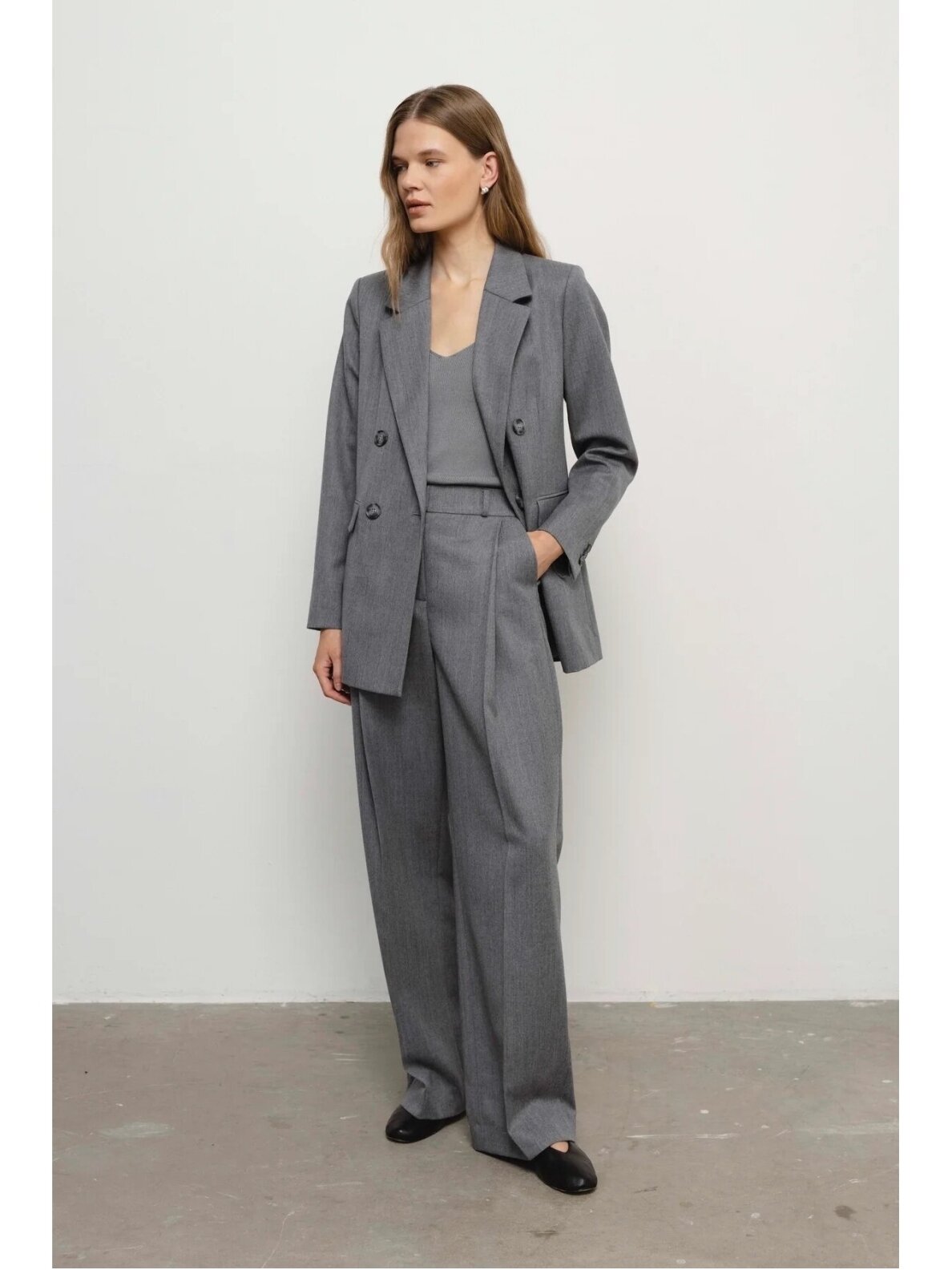
Cut from a fine 100% wool weave with exceptional drape, this suit honors traditional tailored elegance while delivering uncompromised comfort.The double-breasted closure is set slightly lower to create an open, comfortable chest line. Combined with a relaxed leg and jacket cut, it produces a fluid, graceful silhouette.
Note from the Fox: This suit is particularly flattering for rectangle and pear body shapes, subtly defining proportions with effortless balance.
Effortless Stretch
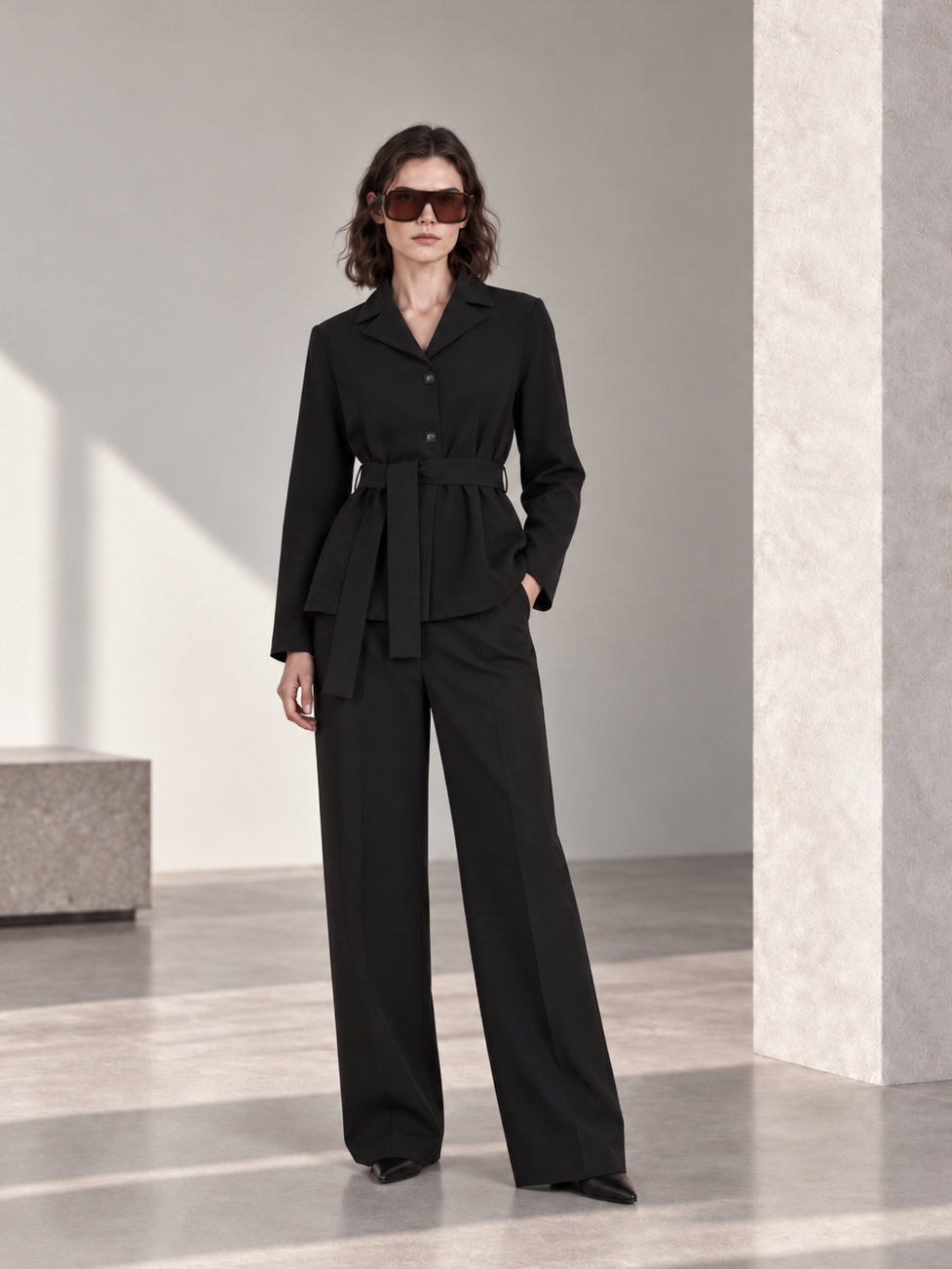
This suit set transitions seamlessly across diverse settings, offering an instantly polished look with minimal effort.Lightweight and tailored with an unlined blazer and self-fabric tie belt, it is crafted from a black cotton blend containing nearly 50% cotton and subtle elastane for flexible daily wear.
To receive our full recommendation guide along with exclusive offers and updates, subscribe to our weekly newsletter delivered every Friday.